RFU Council Backs Governance Reforms to Strengthen Community Rugby


The community game in England has taken a significant step forward after Rugby Football Union (RFU) Council voted to endorse the next phase of its Governance and Representation Review (GRR) — a process designed to modernise how the sport is run and ensure grassroots voices are better heard at the top of the game.
Launched in 2024, the GRR was established to examine the RFU’s organisational and decision-making structures, with a clear objective: to create a governance model that better reflects and serves today’s rugby community — from volunteers and local clubs to the elite professional tiers. Since its inception, the review has involved widespread consultation across the game, with Constituent Bodies (CBs), community representatives and other rugby stakeholders contributing to the proposals.
A stronger voice for grassroots rugby
For the community game, the reforms represent more than structural change — they signal a cultural shift toward clearer representation and accountability.
One of the most significant developments is the enhancement of the Community Game Board (CGB). Under the endorsed proposals, the CGB will have:
- An independent chair
- Clearer responsibility for the community game budget
- Defined KPIs
- Greater operational oversight
This move is designed to ensure that funding decisions, participation strategies and club support structures are more transparent and directly aligned with the needs of grassroots rugby.
Equally important are the new, more structured pathways for members’ voices. Clubs and volunteers will benefit from clearer feedback routes, agenda-setting mechanisms and national and local forums, creating more direct influence over the direction of English rugby.
National Council to replace current structure
The RFU Council itself will evolve into an advisory body known as the National Council. While its formal powers will change, it will retain the right to be consulted before decisions are taken by the RFU Board and its subcommittees. This aims to create a clearer, more structured role for representatives — ensuring community insight is embedded earlier in the decision-making process.
The size of Council will be reduced in phases from 62 to 44 members by 2029. Importantly, the principle of directly elected representatives will remain, with added representation for the National Youth Council and the women’s game — a recognition of the sport’s continued growth and diversification at community level.
Greater transparency and accountability
The reforms also seek to strengthen accountability across the governing body. The RFU Board will formally report to members with:
- A clear consultation policy
- Transparent reporting on decisions taken
- Regular structured reviews of decision-making effectiveness
Board, Community Game Board and committee appointments will move to a more open, skills-based recruitment model, with roles available to candidates from across — and beyond — the traditional rugby network. A single Nominations Committee, supported by a new Talent Team, will oversee the process.
For grassroots clubs often calling for clearer communication and transparency around funding and strategic priorities, these changes are intended to provide reassurance that governance is evolving alongside the modern game.
Leadership reaction
RFU President Deborah Griffin described the endorsement as a major milestone:
“Today’s endorsement marks an important step towards a more modern, transparent and representative governance model for English rugby. The changes strengthen the voice of the game, improve accountability to members, and ensure that decision making sits with the right bodies for the long-term health of the sport.”
She also emphasised the importance of the consultation process, noting that engagement from across the rugby community had been “deeply valued” and that the reforms are phased and pragmatic.
RFU Board Chair Sir James Wates added:
“This is a hugely welcome and necessary step toward a more modern, transparent and accountable governance framework for English rugby. The Council’s endorsement reflects a clear, shared commitment to strengthening how our game is led, closer connection to the voices of our members and the wider rugby community.”
What happens next?
The proposed reforms will now be presented to members at a forthcoming Special General Meeting. If approved, implementation will begin in phases.
For the thousands of volunteers, players and clubs who form the backbone of the English game, the message is clear: governance reform is being positioned not as a boardroom exercise, but as a reshaping of how community rugby influences the future of the sport.
As the process moves forward, the RFU has committed to continued collaboration with Council, CBs, clubs and rugby organisations — aiming to ensure the community game remains informed, engaged and central to decision-making in the years ahead.
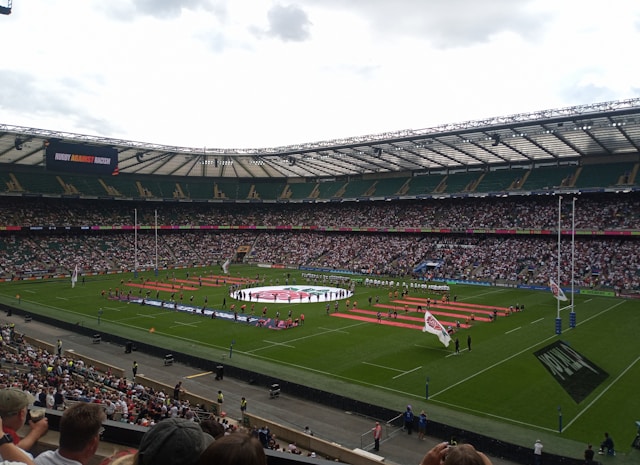
Photo by Richard Glendenning on Unsplash