
Edward Morello MP: “Grassroots Rugby Clubs Are the Heart of Our Towns”


When Edward Morello arrived in Parliament as a new MP, rugby wasn’t necessarily expected to become one of the issues he’d speak up about. But for him, it was never just politics — it was personal.
“I’m a rugby fan,” he says. “Football is talked about a lot, football governance is talked about a lot — and I don’t feel rugby is talked about enough. It’s just as valid a pastime and just as loved in this country.”
Using his platform in Westminster, Morello wants to make sure rugby — especially the grassroots game — is part of the national conversation. And for him, that starts with one key issue: where the money is going, and whether it’s actually reaching local clubs.
“If public money is involved, Parliament should be able to scrutinise it”
At the heart of Morello’s concerns is accountability.
“Sport at every level is a business,” he explains. “And wherever public money is involved, there should be scrutiny. That’s not because I think bad things are happening — I just want to know that someone is checking the money is being spent effectively.”
He says he’s repeatedly frustrated by being told the RFU is an “arm’s length body” when he asks questions in Parliament.
“Sure, it’s arm’s length — but it’s an arm’s length body receiving taxpayers’ money. So it’s reasonable to ask: what scrutiny is there? Who is paying attention?”
For him, this isn’t about attacking rugby’s governing body — it’s about making sure grassroots clubs see the benefit of funding that is meant to support the game.
A rugby family, seeing it first-hand
Morello’s interest in grassroots rugby isn’t abstract — it’s rooted in family life.
“My wife took up women’s rugby in her late 20s, early 30s. My son, who’s eight, plays at our local club. I’m there every Sunday. We’re at away matches in the local area too.”
That exposure has shown him just how uneven the grassroots landscape can be.
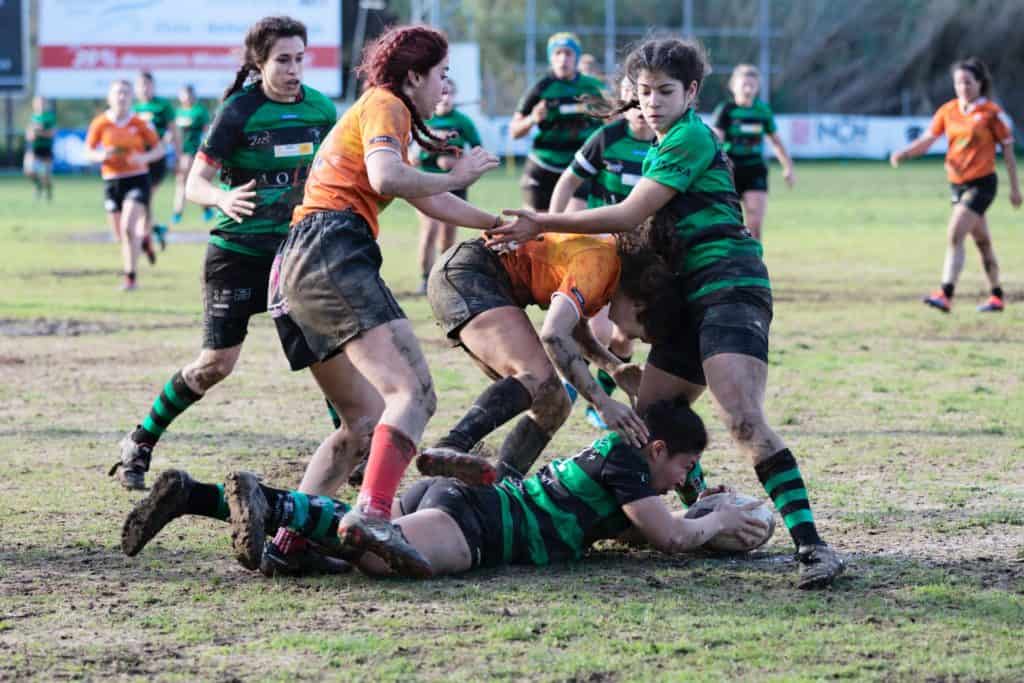
“The difference between clubs is huge — facilities, player welfare, services, whether they can even put out junior teams, whether they’ve got women’s teams. It’s vastly different.”
He describes clubs where volunteers are stretched to breaking point — juggling inspections, safeguarding, facilities and matchdays.
“I saw a club where the catering is run by the local Scouts just to make ends meet. Then an local RFU inspector turns up unannounced on game day. Inspections are important, of course — but you see volunteers running around pulling their hair out, already trying to manage dozens of games and hundreds of kids.”
For him, it highlights how much of grassroots rugby runs on goodwill alone.
“We’ve lost 170+ grassroots clubs over the past couple of decades. These places are run entirely by volunteers. It’s like running a multinational company — except you’re doing it in your spare time.”
“Every little helps — because there isn’t much money at that level”
Morello is clear: even relatively small sums can make a big difference at grassroots level.
“These clubs are constantly fundraising, applying for grants, badgering the town council — just to fix changing rooms or replace facilities that are decades old.”
He points to the financial fragility of clubs dealing with weather disruption and rising costs.
“If pitches flood and games are off, that’s lost revenue. But the fridges are still on, the freezers are still on, the energy bills are still there whether the clubhouse is being used or not.”
So when he sees national funding figures, he asks a simple question: how much is really getting down to clubs?
“It’s not unreasonable to say: if millions of pounds are in the system, how much is actually reaching grassroots? Because at that level, everything matters.”
A mixed picture — and a participation problem
Morello is quick to acknowledge that not every club is struggling.
“You do see clubs doing well — new clubhouses, busy matchdays. But then you’ll visit another club in a similar-sized town 20 miles away and they can barely put out a team.”
That inconsistency worries him — especially when participation numbers don’t seem to match the growth in the professional and international game.
“Viewing figures at the top level are going up. But how do you turn more eyeballs into more participation? I don’t see a clear strategy for that.”
He’s particularly concerned about adult participation.
“There doesn’t seem to be a strategy for getting people back into the game in their 30s and 40s, or encouraging them to start. That disconnect worries me.”
“Grassroots clubs are more than just sports clubs”
For Morello, one of the biggest misunderstandings in policy is how people view rugby clubs.
“There’s a perception issue about what a rugby club is. It’s not just a sports venue. It’s a community hub.”
He describes clubs hosting children’s activities, social events, local meetings, and town celebrations.
“The same people running the rugby club are often organising the town fete or the fireworks display. Lose the club and you lose the heart of the community.”
That wider social value, he believes, isn’t fully recognised.
“When you look at a rugby club as just ‘a sports club’, you completely miss its social impact.”
His message to volunteers
At the end of the conversation, Morello doesn’t hesitate when asked what he’d say to the volunteers keeping clubs alive.
“You’re absolute heroes,” he says. “I don’t know how you do it — how you find the time, the energy, the constant positivity. But thank God for you, because these clubs wouldn’t exist without you.”
For the grassroots game, that may be the truest statement of all.




“A community hub” – never truer nor more important few words stated. Financing local community rugby clubs is the imperative for sustainability. Future players and fans emanate from these clubs.