
The Offload: Rob Shotton’s 60-Club Ride Is Helping Rugby Lighten the Load

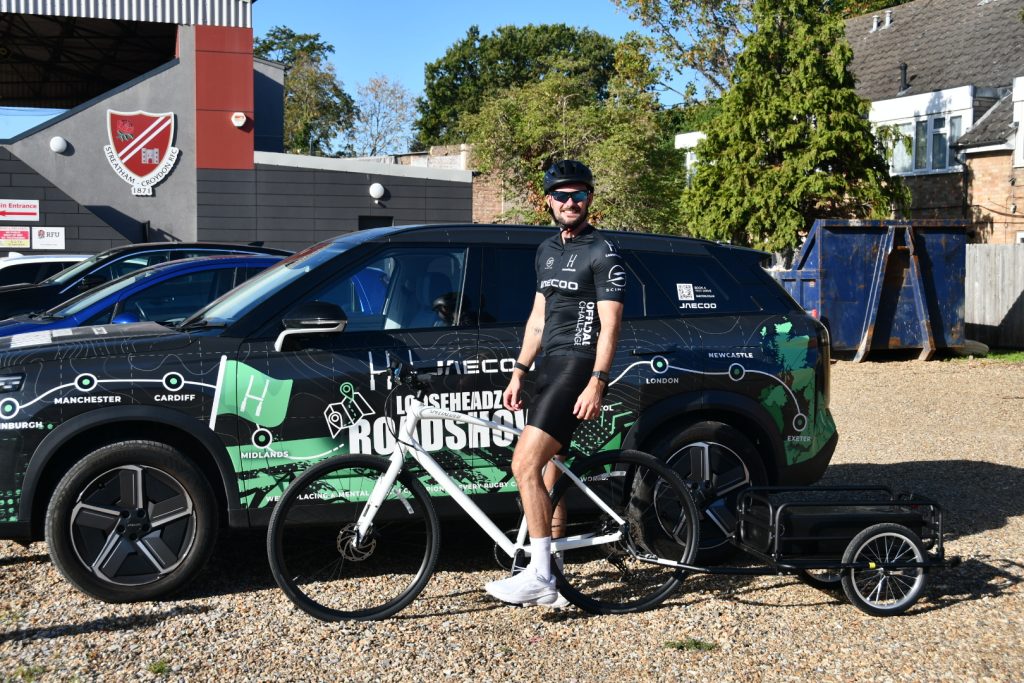
Sixty rugby clubs, sixty tries and six days in the saddle would be a formidable challenge for an experienced cyclist.
For LooseHeadz co-founder Rob Shotton, it carries even greater significance. Eleven years after breaking his back in a cycling accident, Rob is back on a bike for The Offload – a journey across London designed to raise funds and encourage honest conversations about mental health.
Sixty clubs and one powerful symbol
Running from 21 to 26 September, The Offload will see Rob visit 60 rugby clubs in six days. At every stop, he intends to score a try before cycling on to the next ground.
He is also towing a water butt behind his bike.
The unusual piece of equipment represents the emotional weight people can carry when they feel unable to talk about what they are experiencing. At every club, some of the water is poured away, reflecting how sharing a problem can begin to make that burden feel lighter.
The objective is to reach the final destination with an empty water butt – and to leave behind a simple message at every rugby ground visited: nobody should have to carry their struggles alone.
Current and former professional players are also expected to join Rob along the way, recreating memorable tries at some of the participating clubs.
Back on the bike after a serious injury
The physical demands of the challenge should not be underestimated.
Rob broke his back after falling from a bike 11 years ago and says he had not properly returned to cycling before preparing for The Offload. Travelling between 60 clubs while towing the water butt makes this a significant personal undertaking as well as a fundraising event.
However, the challenge also reflects much of what community rugby does best.
Every ground provides another opportunity for players, volunteers and supporters to gather around a shared cause. Rather than holding one large event in a single location, Rob is taking the conversation directly to rugby communities across London.
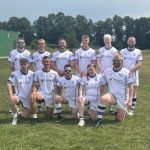
Members of Surbiton Decca RFC were among those who welcomed Rob to Tolworth Court on Monday. It was one stop on a demanding journey, but also an example of how individual clubs can help amplify an important message simply by opening their doors and showing their support.
Making mental health part of club life
LooseHeadz began in 2017 after founders Dave, Mark and Rob discussed people they knew who had experienced a “life wobble” – and acknowledged that they had not always known how best to help them.
From that conversation came a charity using rugby’s reach and sense of belonging to challenge mental-health stigma.
LooseHeadz now says its movement involves more than 1,300 rugby clubs across 36 countries, supported by over 50 ambassadors and a community of more than 100,000 people.
Its long-term mission is to place a mental-health champion at every rugby club in the world.
Known as a LooseHead, that person becomes a visible and approachable presence within their club. They are not expected to replace trained mental-health professionals. Instead, they can help start conversations, share appropriate information and guide people towards further support when it is needed.
Practical support for grassroots clubs
Awareness campaigns are valuable, but clubs also need practical resources if they are to make lasting changes.
LooseHeadz provides its partner clubs with a free toolkit which includes training, signposting material and access to a confidential 24-hour text-support service. The resources are designed for the whole rugby community, including players, coaches, referees, volunteers and supporters.
That whole-club approach is important. Someone experiencing difficulty may not be a first-team player or even take to the field. They could be a parent, a youth coach, a committee member or the volunteer standing behind the bar each weekend.
Community rugby clubs often provide friendships and trusted relationships which extend well beyond training and matchdays. With the right support in place, they can also become environments where asking for help feels normal rather than uncomfortable.
Why The Offload matters
The Offload is an eye-catching endurance challenge, but its lasting value will not be measured by the number of miles cycled or tries scored alone.
Its real strength lies in the message being carried from one community club to another.
Every stop gives a club an opportunity to consider how it supports the people within it. Every conversation can help weaken the stigma that still prevents some people from speaking openly. Every amount poured from the water butt reinforces the idea that a burden can become more manageable when it is shared.
Rob’s journey demonstrates that grassroots rugby’s greatest contribution is not always found on the scoreboard. Sometimes it is found in noticing when somebody is struggling, making time to listen and helping them find the support they need.
Nobody should have to carry the full weight alone.
Find out more and donate here: https://www.givengain.com/project/rob-raising-funds-for-looseheadz-foundation-127414
Photo by Glyn Roberts.



Responses