Pride, Passion and Purpose: How Welsh Deaf Rugby is Changing Lives

In Wales, rugby is more than a sport—it’s a heartbeat, a unifying force that stretches from grassroots pitches to the grandest of stadiums. Among its proudest ambassadors stands the Welsh Deaf Rugby Union (WDRU), a team that has not only dominated the international stage but also built a powerful legacy of inclusion, representation, and opportunity.
A Legacy of Success
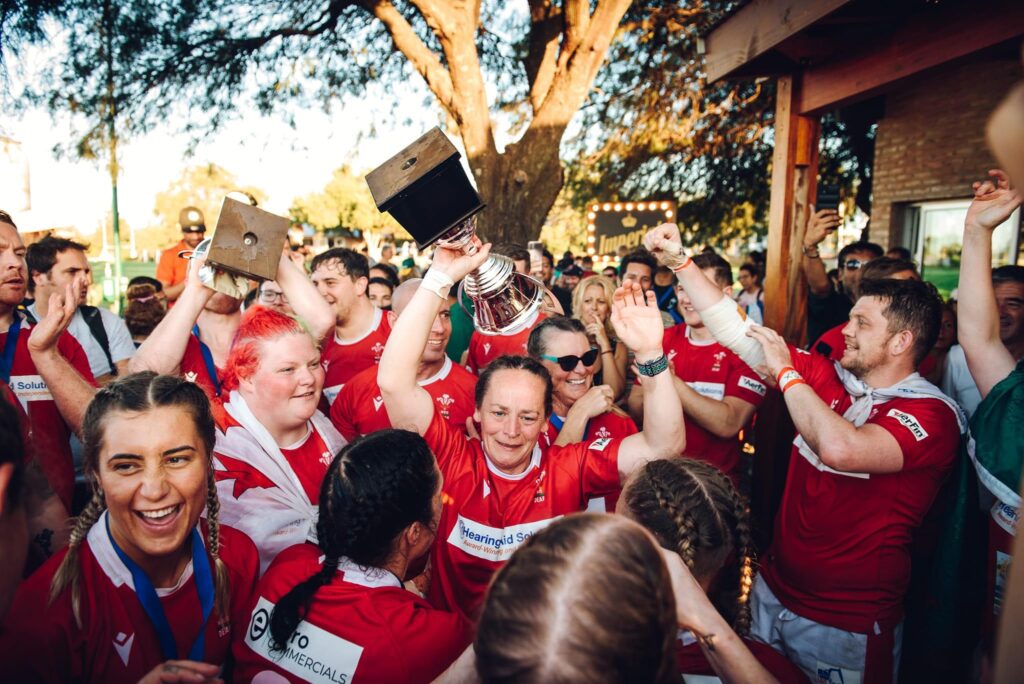
Few teams in world rugby can match WDRU’s record. The men’s side won the first World Deaf Rugby 15s World Cup in Auckland in 2002 and followed it up with a 7s world title in Sydney in 2018. In 2023, both the men’s and women’s squads claimed World Cup glory in Córdoba, Argentina, making Wales the reigning champions across all formats.
“We’ve literally won every tournament hosted to date,” says Co-Secretary Jonathan Cudd. “That success has been sustained for more than two decades, making us an incredibly successful team.”
But behind the silverware lies a mission far greater than titles.
More Than Medals
At the heart of WDRU’s work is a simple but powerful aim: to give deaf and hard-of-hearing people the opportunity to play rugby. Whether through elite competition or grassroots initiatives, the union is determined to break down barriers, build confidence, and foster a sense of belonging.
“Our commission has and always will be to encourage those who are deaf and hard of hearing to play rugby,” says Cudd. “We’ve recently launched a Community Project to engage children, and we’ve also started touch and walking rugby teams for adults of all ages and genders.”
Co-Secretary Alun Radcliffe echoes that sentiment: “Developing grassroots rugby is vital. Rugby teaches teamwork, resilience, and leadership. For young deaf and hard-of-hearing players, having access to a sport that embraces their needs breaks down communication barriers and creates a strong sense of belonging.”
Changing Lives, Building Confidence
The Community Project has already transformed lives. One mother shared how her son, once ashamed of his deafness, began proudly wearing his hearing aid to school after joining the program. For WDRU, these small victories mean as much as international trophies.
Senior players, too, have found new pathways through WDRU. Former youngsters such as Adam Brake and Gareth John went on to play semi-professional rugby for clubs like Llanelli, Pontypool, and Pontypridd. These journeys highlight the union’s role as both a talent pathway and a community lifeline.
Challenges on and off the Field
Success hasn’t come without obstacles. When the squad travelled to Argentina in 2023, funding the trip was a monumental challenge. Players, all amateurs with full-time jobs, sacrificed time, money, and energy to make the journey. On arrival, logistical issues with accommodation piled on further stress.
“The feeling of winning varied from player to player,” says Cudd. “Some were ecstatic, others simply relieved that all the sacrifices had paid off.”
The road ahead promises more of the same. In 2026, the team will defend their titles in Tokyo, but the financial cost of sending squads to Japan is steep. Recruiting new players and raising funds are immediate priorities.
Changing Perceptions
Through its victories and outreach, WDRU has become a symbol of what deaf athletes can achieve. “We’ve moved the conversation beyond limitations,” says Radcliffe. “Deaf athletes are not just participants—they are leaders, role models, and champions.”
The team’s visibility, both globally and within Welsh communities, has challenged outdated assumptions and inspired a new generation to believe in their potential.
A Family, Not Just a Team
What makes WDRU special goes beyond the pitch. “We’ve created a family environment,” Radcliffe explains. “From elite athletes to first-time players, everyone involved is part of something bigger—a supportive network where players are valued and empowered to thrive.”
This culture of care has been central to the union’s community project, which has not only developed rugby skills but created safe spaces where young people feel seen and celebrated.
How Fans Can Help
To sustain and grow, WDRU needs its supporters more than ever. Fans can:
- Show up and share: Attend matches, follow on social media, and spread the word.
- Advocate for inclusion: Champion accessibility in sport.
- Volunteer or partner: Offer time, expertise, or community links.
- Support financially: Through donations or sponsorships that cover travel, equipment, and programs.
“It’s about raising awareness as much as raising funds,” says Cudd. “We want the Welsh rugby public to know we exist and to back us.”
Find out more about the fundraising here.
Looking Ahead
In the next decade, WDRU envisions growth on three fronts:
- Talent: A thriving pipeline of young players from every corner of Wales.
- Visibility: A powerful brand recognised both in deaf sport and the wider rugby world.
- Influence: A respected voice in shaping the future of inclusive sport.
“We want our legacy to be one of empowerment and opportunity,” Radcliffe says. “A culture where deaf athletes are celebrated for their talents, have clear pathways to compete, and feel a deep sense of belonging.”
A Lasting Legacy
Ultimately, WDRU’s mission is to show that hearing loss is not a hindrance but a badge of pride. Players who pull on the red jersey, wear the three feathers, and sing Mae Hen Wlad fy Nhadau carry with them not just personal ambition, but the hopes of an entire community.
As Wales looks to Tokyo 2026 and beyond, one thing is clear: this is more than a rugby team. It is a movement—one that proves again and again that resilience, unity, and pride can break down every barrier.